
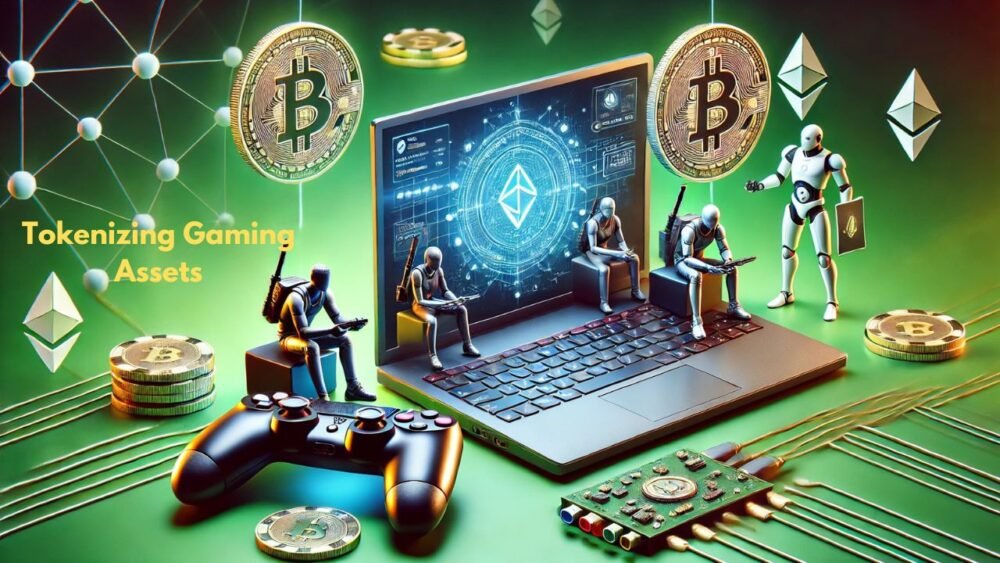
Overview
GameFi or play-to-earn (P2E) games are emerging gaming models that have garnered considerable hype recently among gamers and game developers. Imagine spending hours on the laptop playing games and actually getting rewarded for your skills. Sounds thrilling, right?
So, what exactly is GameFi? The idea of GameFi is rooted in decentralized finance (DeFi), an innovative digital gaming model that allows you to earn for playing games. But where does tokenization fit in?
Asset tokenization is a promising technology that has touched almost all aspects of our lives from real estate tokenization to commodities, financial assets like stocks, and even intellectual properties like copyrights.
Tokenized GameFi is a next-gen gaming concept that uses blockchain technology to convert in-game assets into digital tokens or NFTs (non-fungible tokens). It creates an all-inclusive and player-driven gaming experience and better monetization opportunities for players and game developers. In this blog, we simplify the concept of tokenized GameFi and how it could revolutionize the digital gaming ecosystem. Let us dive into the facts.
Introducing GameFi Tokenization – A Radical Movement in the World of Online Gaming
Before we delve into GameFi tokenization, let us understand what GameFi is.
GameFi, as the name suggests, is an amalgamation of “gaming” and “finance.” It taps the power of blockchain technology and web3 to create an immersive gaming environment for players and developers. These blockchain-based games offer a decentralized virtual space for game developers and gamers to engage and accrue rewards from gaming assets.
GameFi ecosystems integrate play-to-earn or P2E models that enable players to earn rewards such as cryptocurrencies, digital tokens, or NFTs for playing games.
Tokenization of GameFi mints virtual gaming assets like weapons, characters, and other gaming items into tokens on a blockchain. These tokens are interoperable and can be owned and traded even outside the virtual environment. Tokens have embedded smart contracts that make them irreversible and unchangeable. The gaming characters or items are permanently recorded on the blockchain and cannot be changed or altered even by game developers. The characters or items like a plot of land will always remain the same.
Tokenized GameFi opens new revenue schemes and creates a gaming community for players and creators who can monetize their gaming skills and earn revenues that have value outside the virtual realm in the real world. It creates a collaborative ecosystem where experienced gamers can guide and lend their gaming assets to newbies and earn a share of their earnings in return. Gamers can also take part in governance protocols and make important decisions through DAOs (decentralized autonomous organizations).
How Does Tokenized GameFi Work?
Tokenization empowers players and the gaming community, gives them control over their in-game assets, and allows them to monetize assets within and outside the digital realm.
Here is how it works:

Gamers pay NFTs or tokens to play games, purchase in-game assets like weapons or props, enhance characters, upgrade to a new level, etc. In return, they earn gaming tokens or rewards. These tokens can be exchanged for cryptocurrencies, NFTs, stablecoins, and real money, i.e., fiat currencies in decentralized exchanges. Players get actual ownership of virtual assets such as lands, weapons, vehicles, etc.
In traditional games, there are certain limitations. The gaming props or assets are locked within the game and are only valuable inside the game. Game owners do not own or have any power to alter the in-game assets. Once they leave the game or if the game developers decide to shut it down, they lose access.
In tokenized GameFi, everything is on the blockchain. Players have true ownership of the in-game assets immutably recorded on the blockchain. Once tokenized, these assets are transferred to the digital wallets. These assets have value outside the GameFi in the real world. Gamers can trade or exchange these assets in decentralized marketplaces with other players.
GameFi creates an equitable gaming ecosystem that empowers gamers to control and have ownership of their assets.
What are the Benefits of Tokenized GameFi?
Asset ownership
In traditional games, the gaming assets are kept in centralized gaming servers owned by the gaming company. These companies own these assets and can remove these assets or restrict players from using them of their own free will.
Blockchain tokenization generates actual ownership of these assets. Once a gaming asset is tokenized on the blockchain, the player becomes the true owner and has full rights to the asset. The gaming company or developer no longer owns or can in any way alter or remove the in-game asset, or restrict the player from using it. For instance, if a player owns a piece of virtual land in a tokenized GameFi, he can lend, exchange, or sell the land to another player at any time.
Seamless asset transfer
In NFT gaming models like GameFi, smart contracts play a key role in automatizing the ownership and transfer of assets. Smart contracts are programmable and once the player makes the payment, the gaming asset is instantly and automatically transferred to his account without the hassles of any intermediary. This accentuates the gaming experience and is less time-consuming for gamers.
Interoperability
GameFi tokenization generates interoperability in gaming. Players can transfer and use in-game assets that are owned by them across different games that operate on the same blockchain network. In traditional games, it is impossible. The gaming assets are typically owned by gaming companies and are only accessible within the game. Once the gamer leaves the game, he loses control or access to the features or the assets completely.
Monetizing in-game assets
GameFi tokenization has made it easier for players to monetize in-game assets. Skilled and professional players can earn passive income from playing. These assets can be exchanged for cryptocurrencies or real money (fiat currencies) outside the virtual world in decentralized platforms.
Player-driven gaming community
Tokenization empowers players to own in-game assets, take control, and drive the gaming community which contributes to the overall growth of the gaming economy. The games become more interactive and engaging through voting rights, collaboration, and the exchange of assets.
Fraud prevention
Tokenized in-game assets cannot be duplicated or forged. They are safely stored in blockchain ledgers. All transactions are transparent, verified, and can be tracked by players on the blockchain. This generates trust and compatibility and eliminates gaming fraud and counterfeiting of assets.
Support to gaming companies
Tokenized gaming ecosystems create a competitive, player-centric, equitable, and profitable environment that is beneficial for players and game-developing companies. Companies can hire skilled players who can play and contribute to the gaming industry. Game developers can create long-term engaging games that could drive in more players and are profitable for the company as well as players.
What are the Challenges of GameFi Tokenization?
Despite the unprecedented benefits of GameFi tokenization, the ecosystem is plagued by market volatility, regulatory uncertainty, and the need for consumer protection initiatives. As technology advances, blockchain networks like Ethereum, widely used for GameFi may face scalability problems and network congestion. Furthermore, the tokenization of Gaming is relatively a new concept and many players are unfamiliar with the process. Educating players about the technology and its benefits could help in the wider adoption and growth of the GameFi industry.
Conclusion – Future Prospects of Tokenized GameFi
GameFi tokenization is poised to bring a revolutionary transformation in the online gaming ecosystem. As the industry evolves, game developers and companies should integrate more advanced and refined play-to-earn models for mainstream adoption and broader engagement of players.
Tokenizing GameFi has emerged as a disruptive technology, a path forward that is going to spearhead a breakthrough blurring the line between playing games and earning revenues that have real-world value. As technology progresses, we can witness the emergence of more advanced player-driven gaming economies that could usher limitless opportunities for both players and game developers.